
This section brings together the works of three great Italian painters who eschewed groups and movements, working in conditions that it is fair to define as solitary. The creative journeys we refer to are those undertaken by Giorgio Morandi, Filippo de Pisis and Fausto Pirandello, three artists who had a profound influence on developments in Italian painting, on which they impressed an indelible mark of excellence. Although, in the end, they had only a tenuous relationship with broader developments: not because they never pursued one, but because they ultimately found their own truth, in isolated thought and action, steeped only in solitude.
True, for a brief period Morandi was “close” to Futurism, veined with the Cubist principles of Ardengo Soffici, then to the metaphysical experiments (of Carlo Carrà, in particular), before finally moving towards the “Plastic Values” of Mario Broglio. There was also once a De Pisis, at a time when he was active alongside the other italiens de Paris, who was seduced by the metaphysical disorientation of De Chirico, whom the “marchesino pittore” (as De Pisis styled himself) had previously befriended in his native Ferrara. And there was once a Pirandello, who for a brief moment was close to Mafai and Roman Tonalism. But none of them ultimately found their own language in those communal experiences, nor their greatest maturity.
Each artist would pay a price for his isolation: Pirandello’s was the long-time lack of any support save for a handful of critics whose influence did not extend beyond regional borders; De Pisis’s was the derision of many observers; Morandi’s, the various accusations levelled at different times from the most remote fronts, including of a lack of courage and social engagement.
Then there were the countless misunderstandings along the way: from the neo-Impressionism attributed to De Pisis - as if this were an irredeemable legacy from a period already past to Pirandello’s alleged “insularity”. In the end they had no followers, only pale imitators. Not even Morandi, to whom his most impassioned interpreter, Francesco Arcangeli, wanted to ascrbe familiarity with a new “naturalism”: erroneously, of course.
Tre grandi isolati del XX secolo: Morandi, de Pisis, Pirandello
Three Great Twentieth-Century Outsiders: Morandi, de Pisis and Pirandello
Compiler
Fabrizio D'Amico
Share on
Works of art
Veduta di Burano
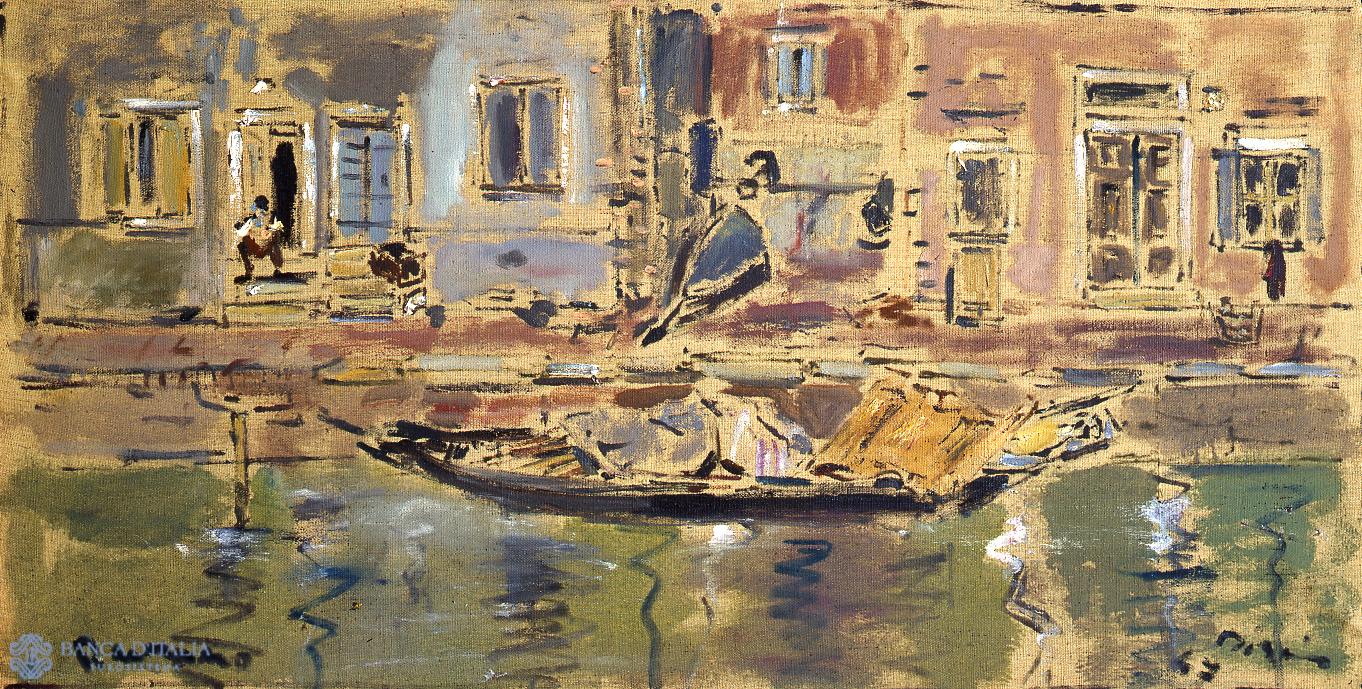
At the centre of this small, simple painting, running perfectly parallel to the base, is a gondola on a Venetian canal. In the background are the run-down houses of the island of Burano, which at that time was still, inhabited entirely by artisans.
20th century AD
Painting
Landscape
Trama di nudo
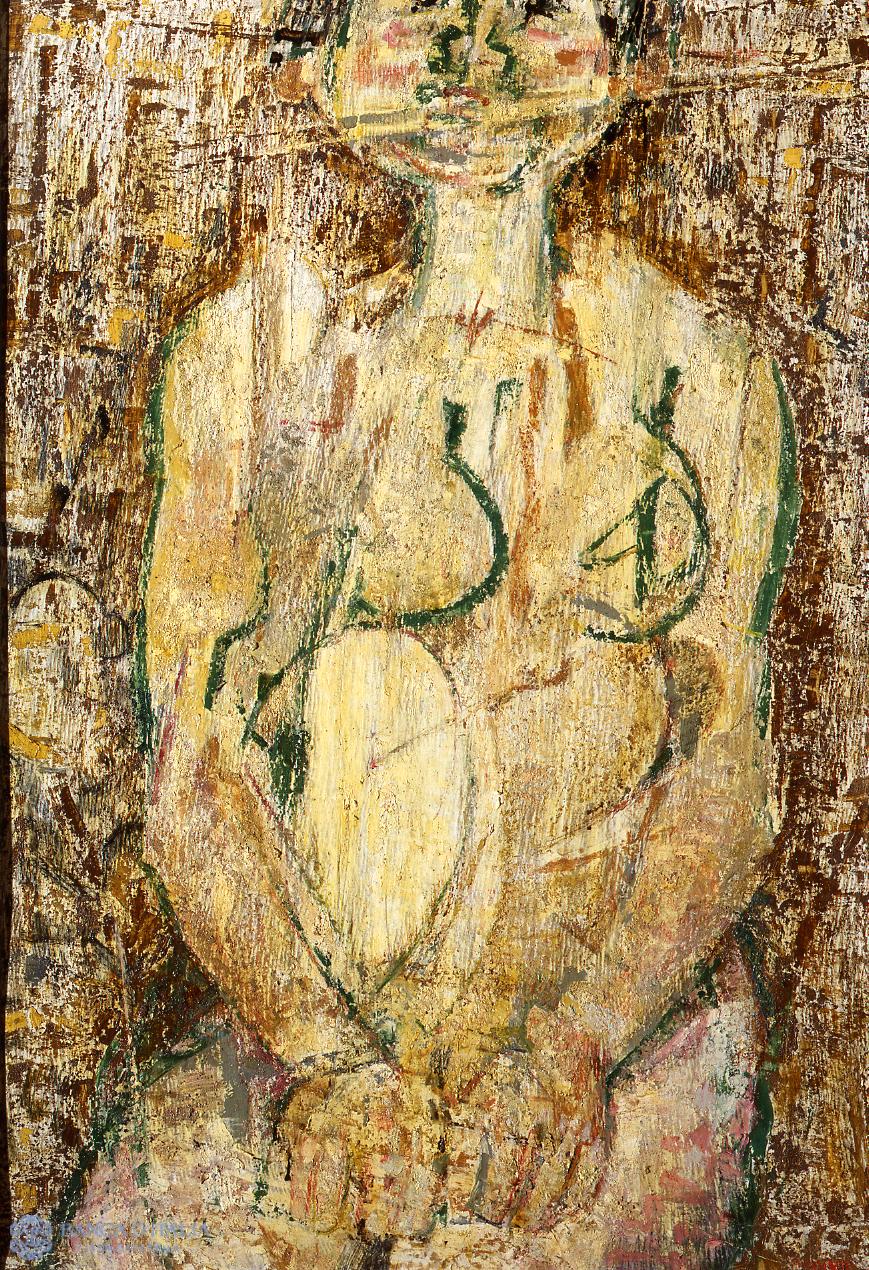
A female figure – a frontal nude, her hands resting on her lap – occupies the entire space of the painting. Indeed, it almost seems as though the mount, the cardboard that was Pirandello’s material of choice in the post-war years, is insufficient to contain the entire image of that pitiful figure: both above and below, the face and legs appear to have been cruelly truncated.
20th century AD
Painting
Figurative
La strada bianca
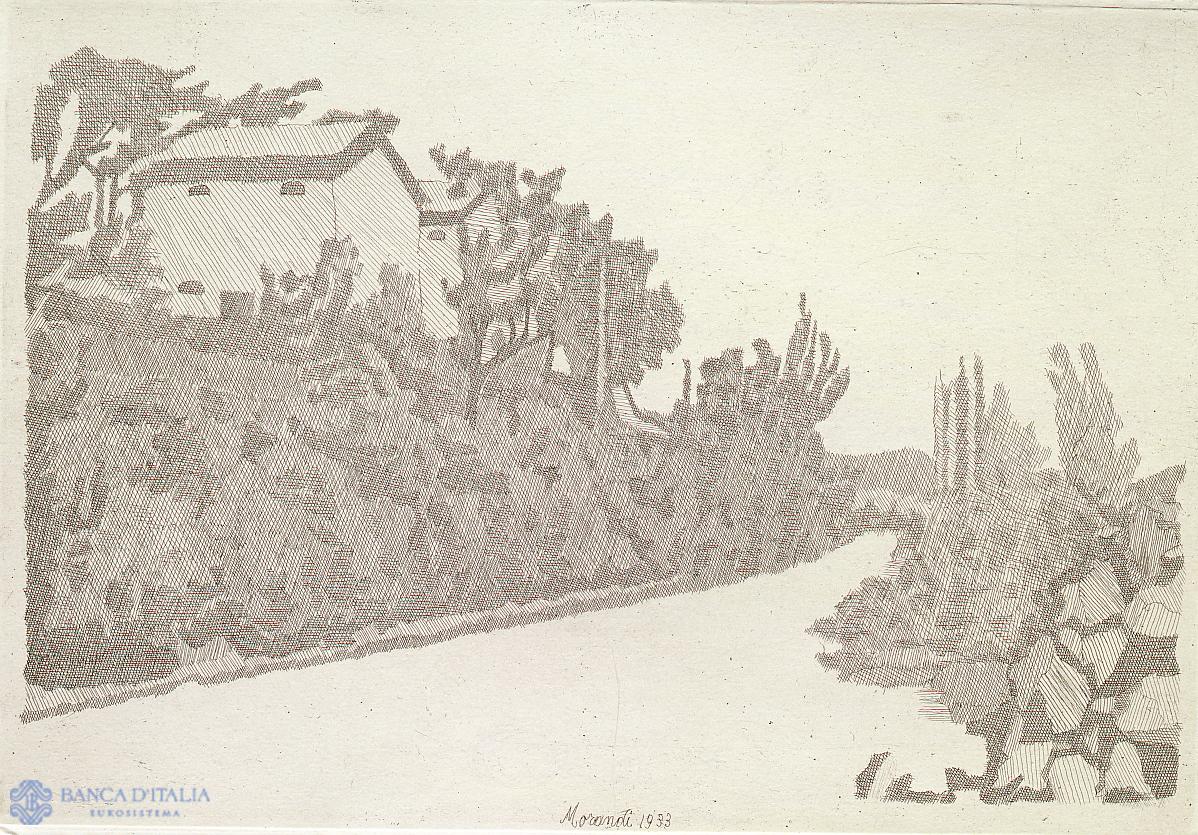
A long road, blanched by the noonday sun, angles towards the far-off back of the composition. It is flanked on the left by a shoulder of greenery, silvery as it too is pierced by light; on it rest, nearly weightless, the simple cubes of two houses, without shadow.
20th century AD
Landscape
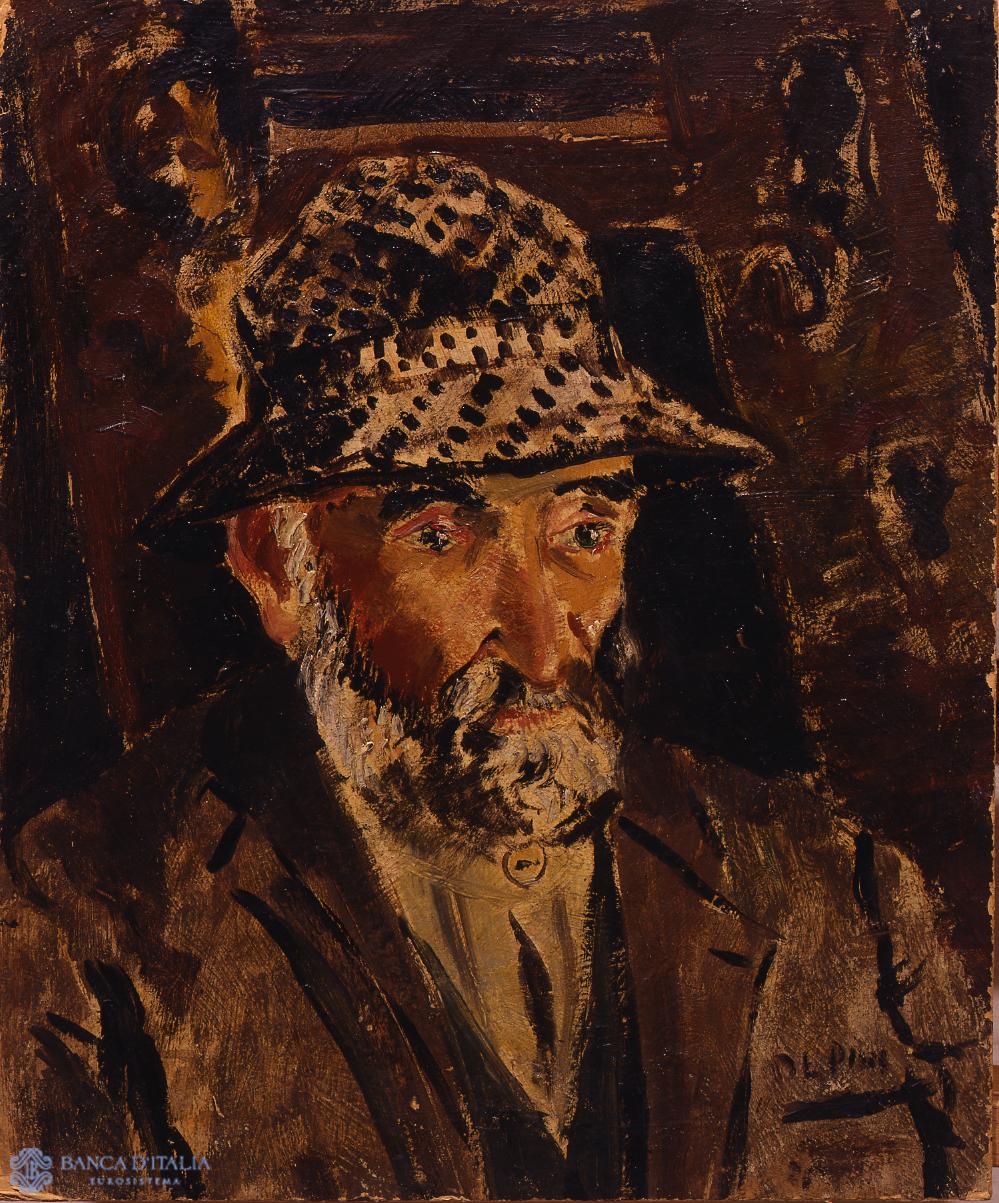
Ritratto di vecchio
Composed of earthen shades, shadows and occasional, rapid streaks of light, this portrait of an old man (a native of Cadore: “this healthy, genteel folk” as De Pisis wrote, moved by his stay at Cortina d’Ampezzo) is a small masterpiece.
20th century AD
Painting
Portrait

Ritratto del Marchese Antonio de Viti de Marco
In his official portrait-painting Antonio Mancini is generally more closely bound to academic schemata and forced to rein in his imagination and control the superabundance of his impastos. In this portrait he nevertheless achieves a noteworthy painterly result, clearly taking the Venetian school of Titian and Tintoretto as a model.
19th century AD
Painting
Portrait

Pepiniello
In this fine painting Mancini offers us proof of his wonderful ability to weave a canvas of light and shadows in which the figure pulsates, conveying a perception so lively and immediate that it almost appears indefinable at first sight.
20th century AD
Painting
Portrait
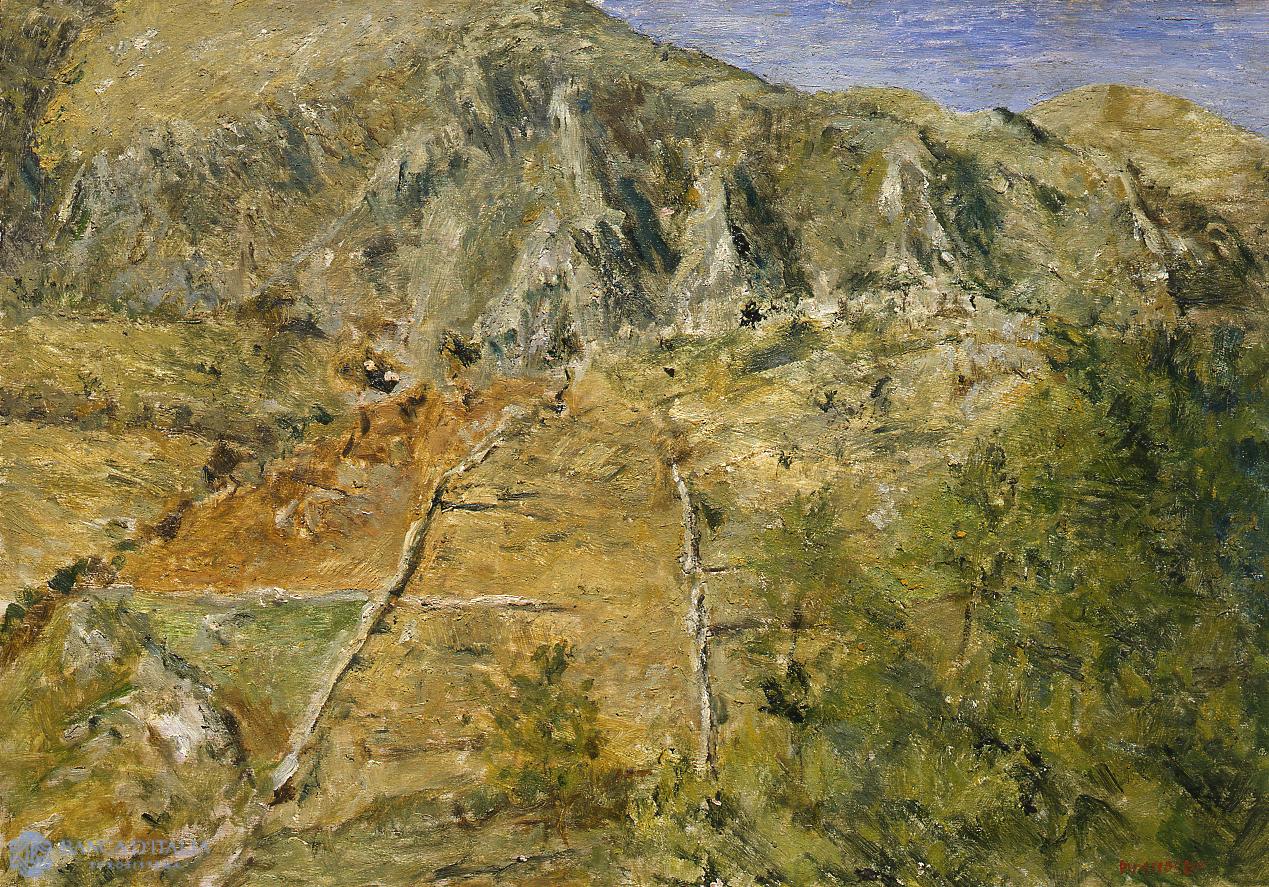
Paesaggio di Anticoli
From the 1920s onwards the town of Anticoli Corrado, a small village set into the hillside in Lazio, was the site of long sojourns by numerous Roman painters (and not only, Arturo Martini also stayed there). Pirandello often portrayed the surrounding hillsides and valley below.
20th century AD
Painting
Landscape
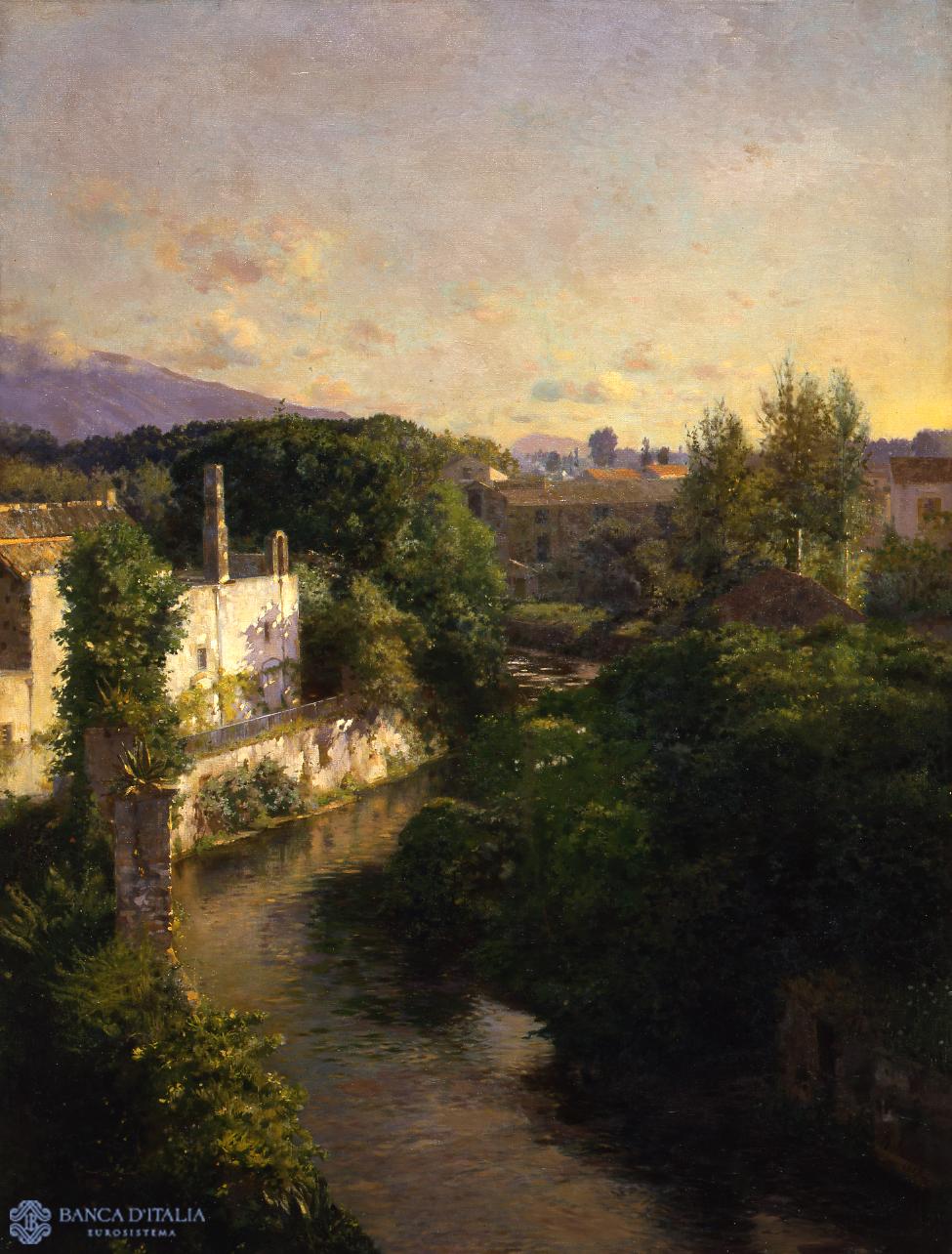
Paesaggio del Sarno
This view of the Sarno river in Campania depicts the places frequented by Rubens Santoro during the period of his studies with Domenico Morelli at the Naples Fine Arts Academy, before he ventured northward without, however, abandoning his fine feeling for landscape.
20th century AD
Painting
Landscape
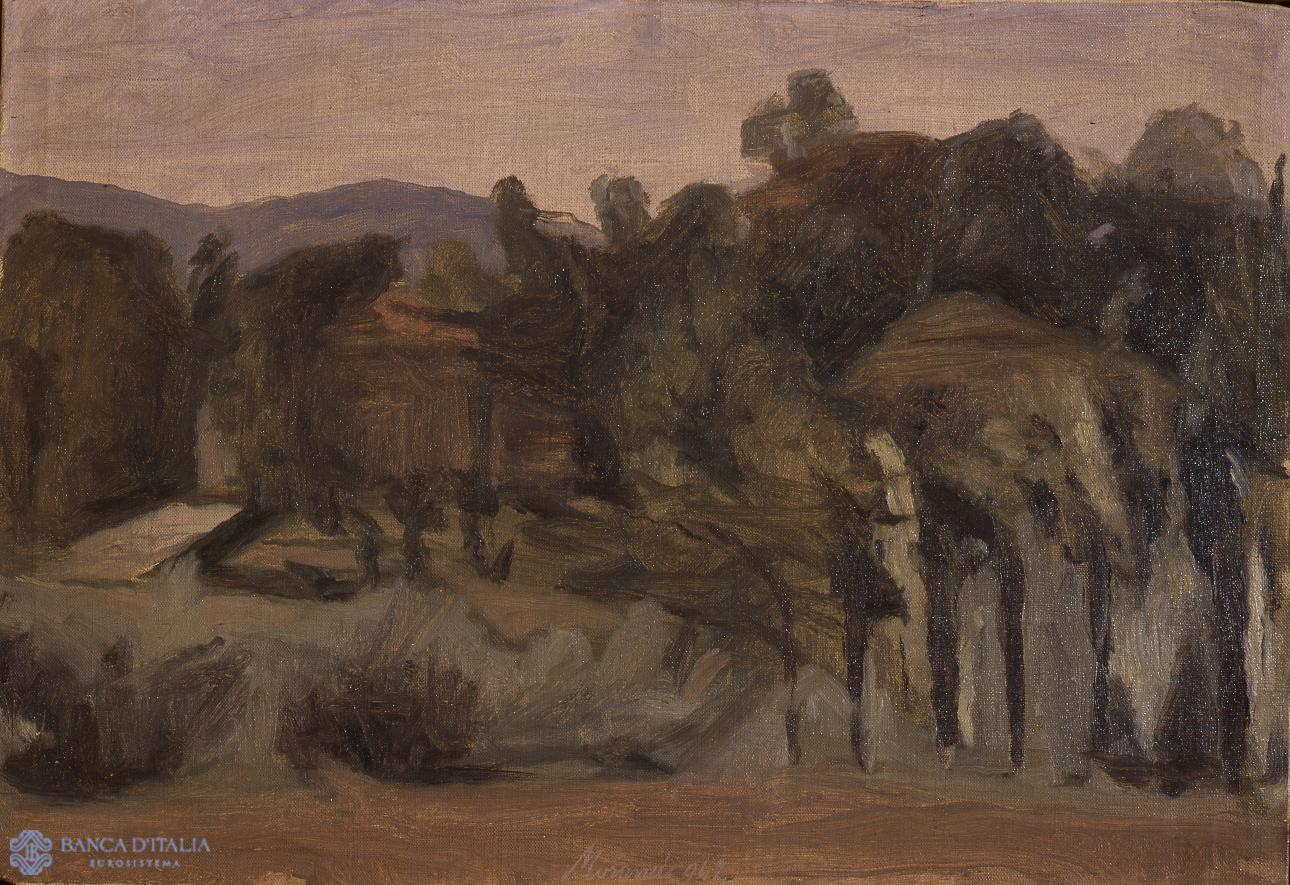
Paesaggio
Fields and sky, trees and houses: but in the end, the composition of this landscape depicts only the wind, which blows every which way, wiping out clarity of form, bringing together in a single tone the various hues of green and ocher. Morandi is at Grizzana, the small village near Bologna where he generally spent summers.
20th century AD
Painting
Landscape
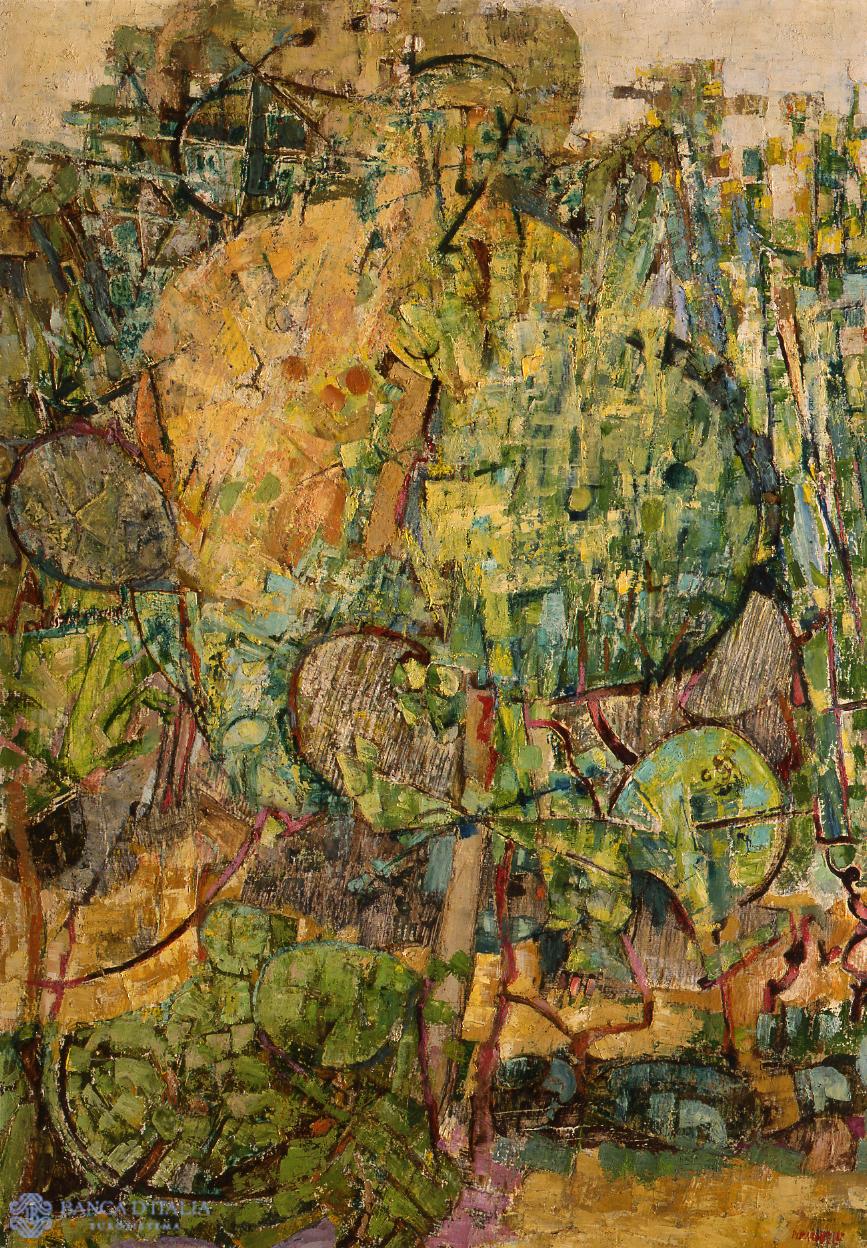
Ombre estive
A cluster of trees occupies the entire space of the cardboard, crowding it, infusing it with anxiety: as if to signify that even before this placid view of a town, Pirandello is unable to assuage his tormented vision of reality.
20th century AD
Painting
Abstract
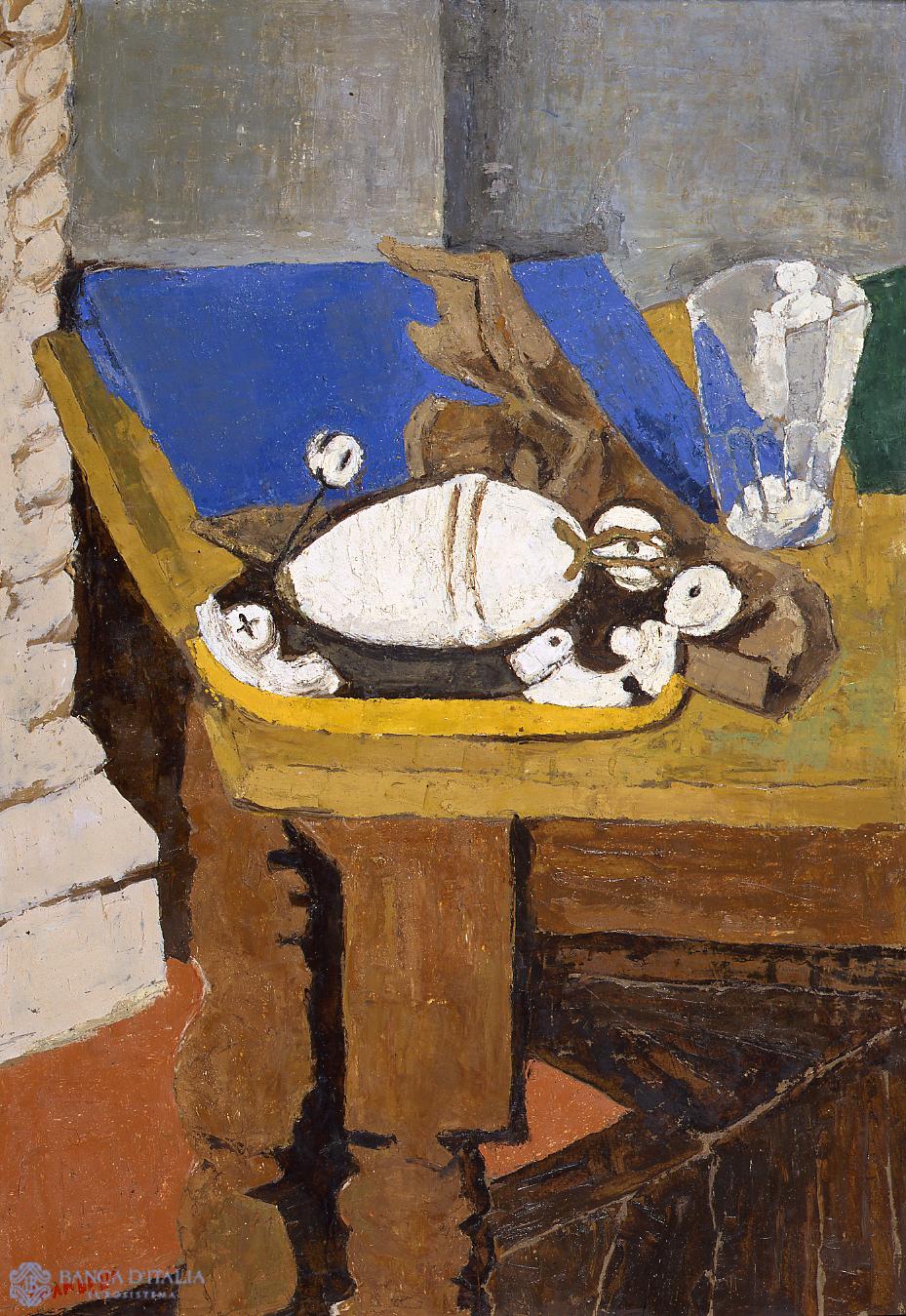
Oggetti elettrici
Small, indeterminate “electrical objects” are piled together on a table pitched extremely high at the centre of the composition; alongside it is a blue folder and a glass. Nothing else. As usual, Pirandello’s still lifes are built using very little, almost as though his meagre visual pretexts have been placed on the horizontal plane by a casual sweep of the broom; governed by a tonal blend of a few earth colours in the midst of which a note of blue frequently rings out.
20th century AD
Painting
Still life

Ninfa: Pastorale
In 1893 Sartorio wrote: “Landscape can be called a form of art for itself, and the theories of relations, thanks to the modern-day English and French and to photography, are in the public domain. I have no great fondness for jumbled, large pictures, because I think they are ill-suited to the Virgilian intimacy and freshness of this art, which is great precisely because it can infuse a great serenity of feeling with just a few but serenely true lines and colours.”
20th century AD
Painting
Landscape
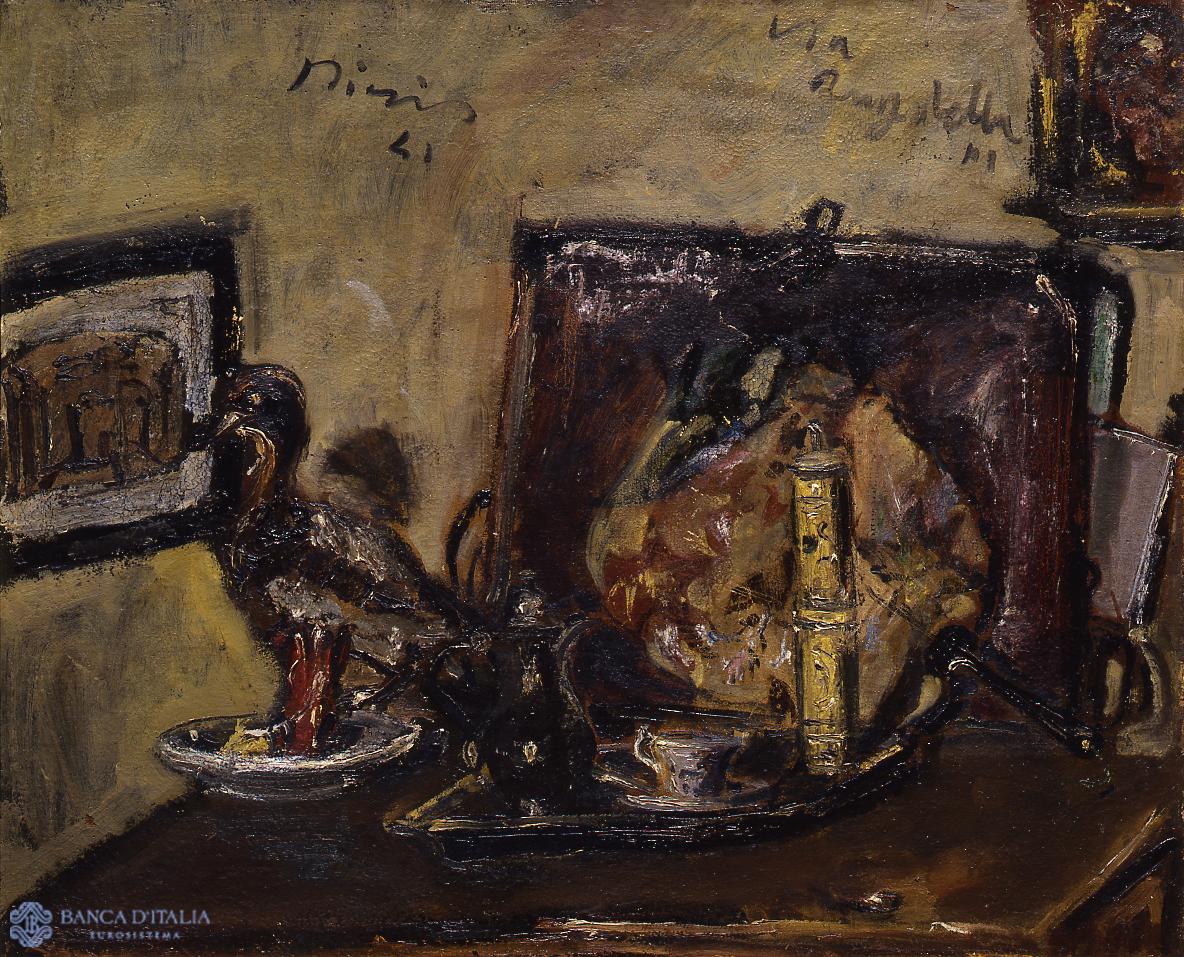
Natura morta romantica
In a space that is almost entirely absorbed by the foreground is a crowded still life: a tray, a pitcher, a cup, a fan, several more trays, a small picture hanging on the wall; and a small ceramic bird that looks alive and almost offended by the pose it has been assigned.
20th century AD
Painting
Still life
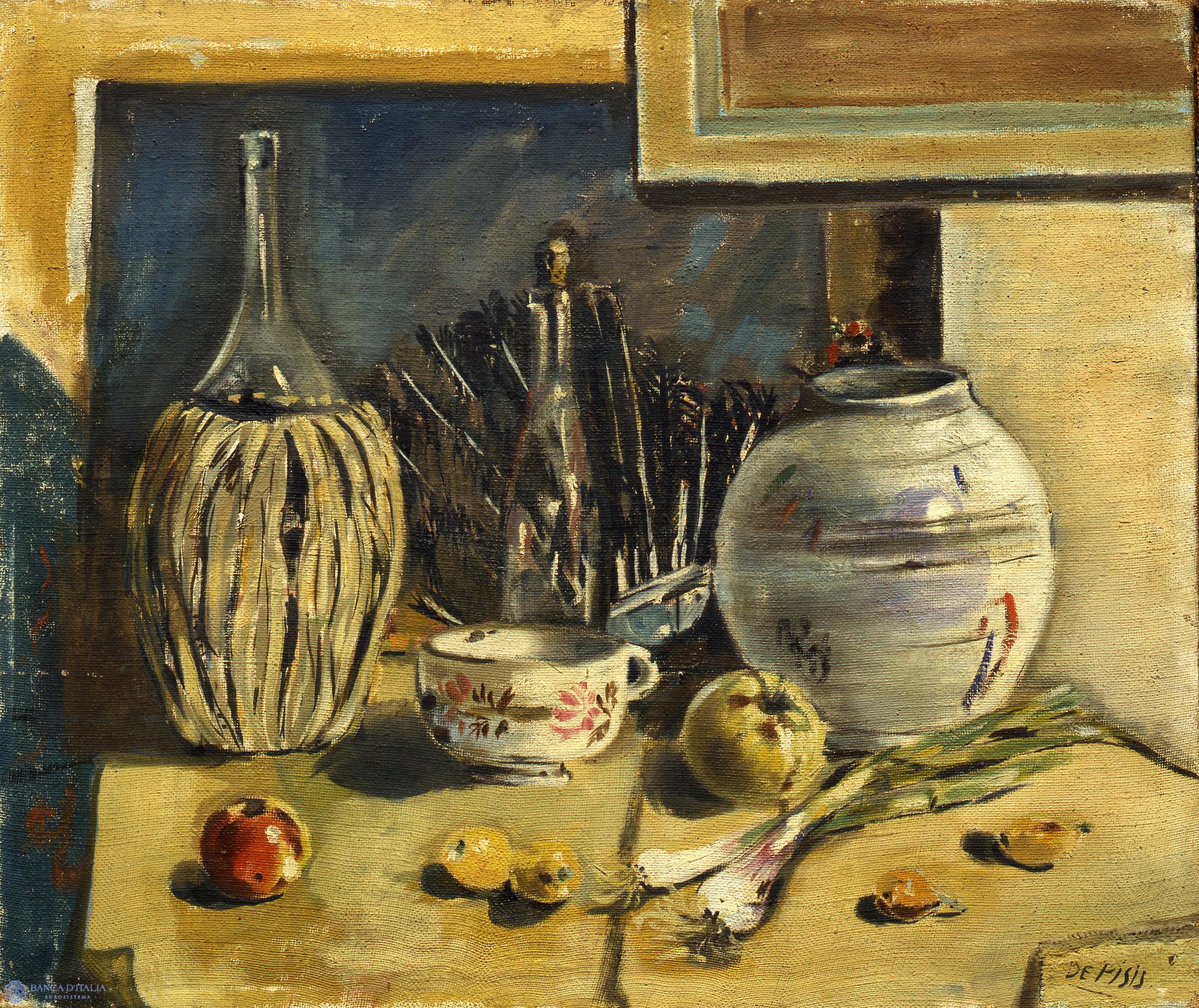
Natura morta con fiasco e ventola
This youthful still life of the “pittore marchesino,” as De Pisis liked to style himself, is crammed with objects: a flask, a vase, a cup, a mirror, a fan, and scattered here and there on the table that seems to slope gently towards the viewer, some fruit and vegetables.
20th century AD
Painting
Still life
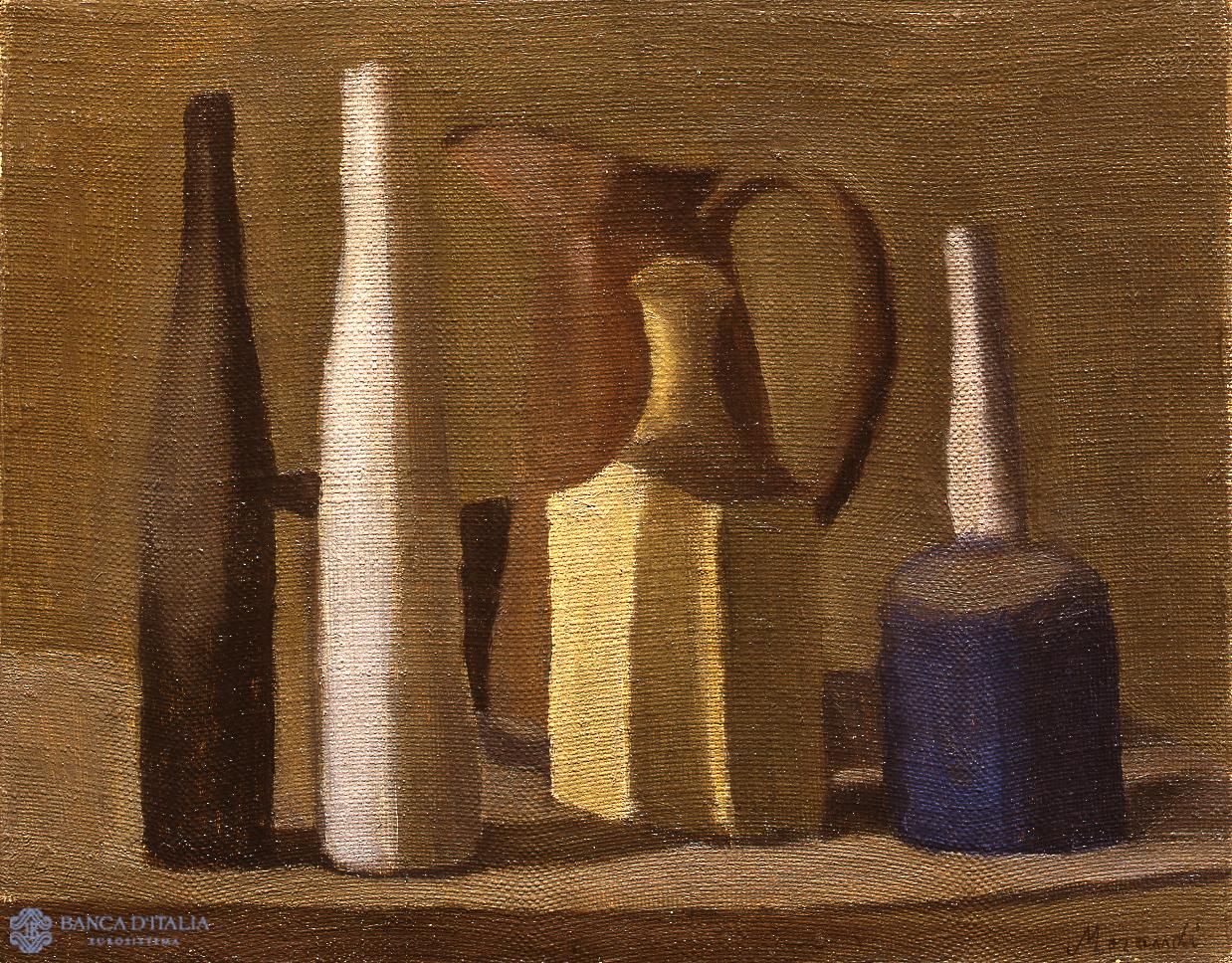
Natura morta
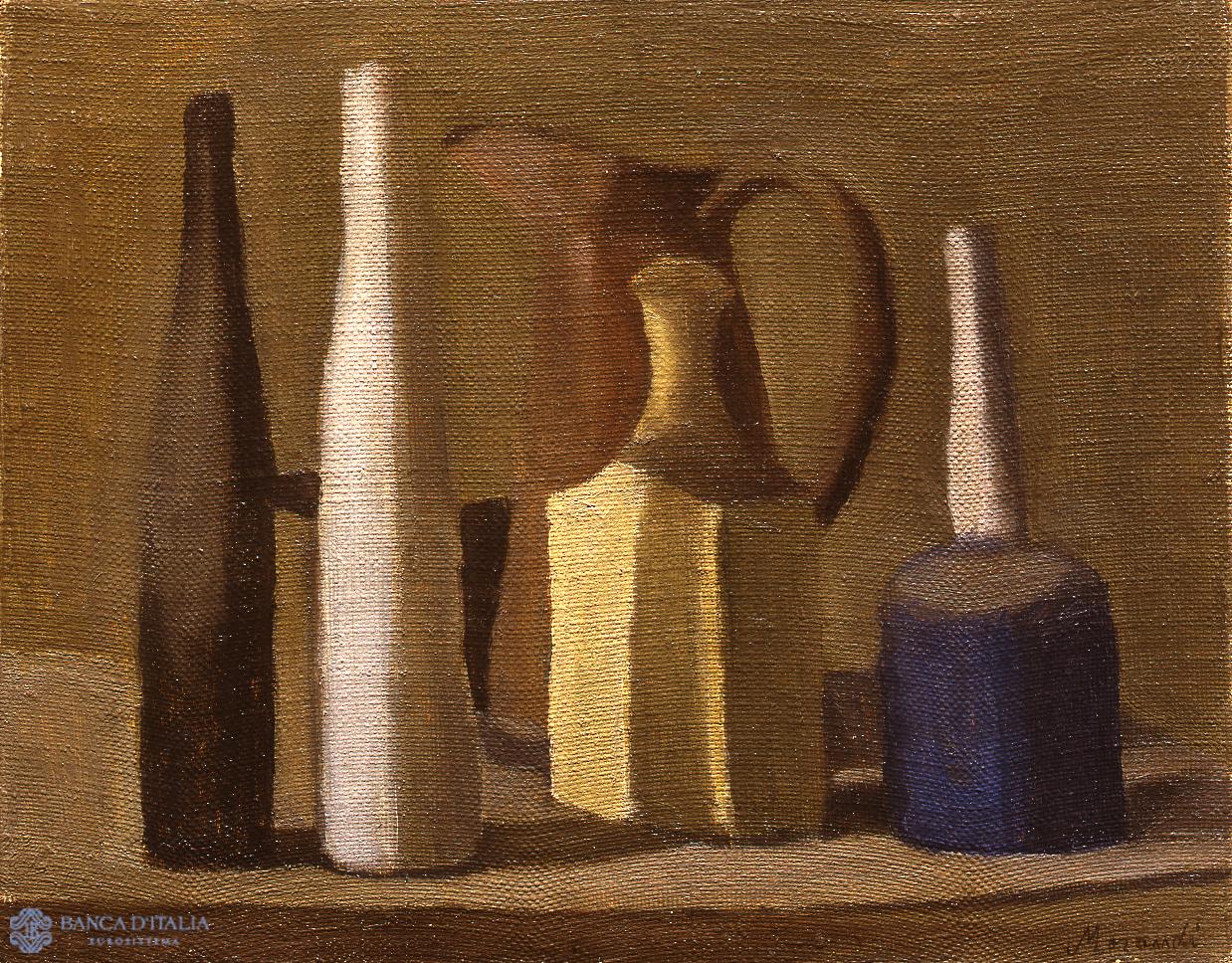
On the surface, in the foreground and clearly delineated by the shadows that the objects project, we find – isolated, cadenced in the limited space given, in orderly succession and severe alternation of solids and voids – the few objects so infinitely familiar to Morandi: the long-necked bottles, the lamp, the pitcher.
Painting
Still life
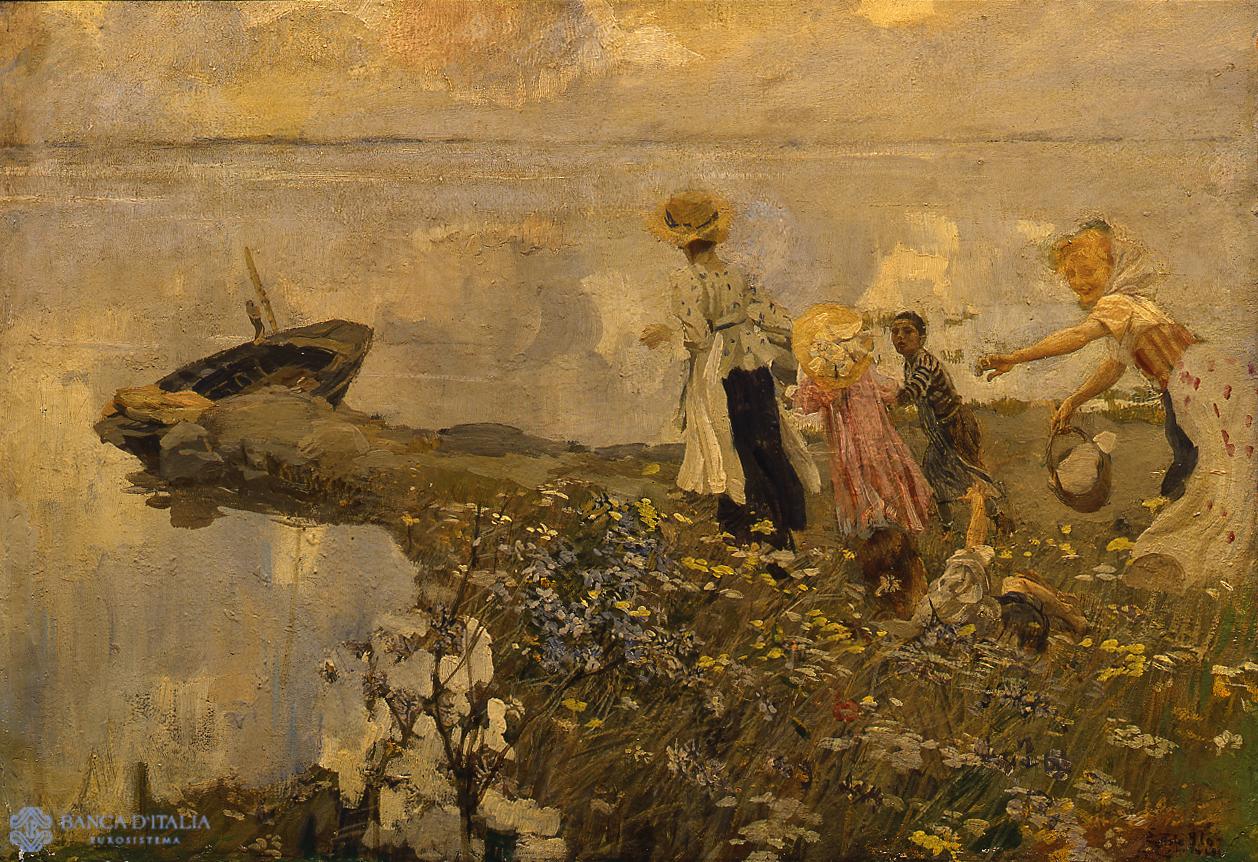
Giochi in riva al lago (o anche Giorno di Festa)
More than a final work, this appears to be a study or note for constructing a composition around the boldly foreshortened image of the point of dark land projecting onto the water. The black strip of land on which the boat is drawn up is extended in the silvery light of the lake. A group of children – three little girls and two boys – are running towards the water.
20th century AD
Painting
Figurative
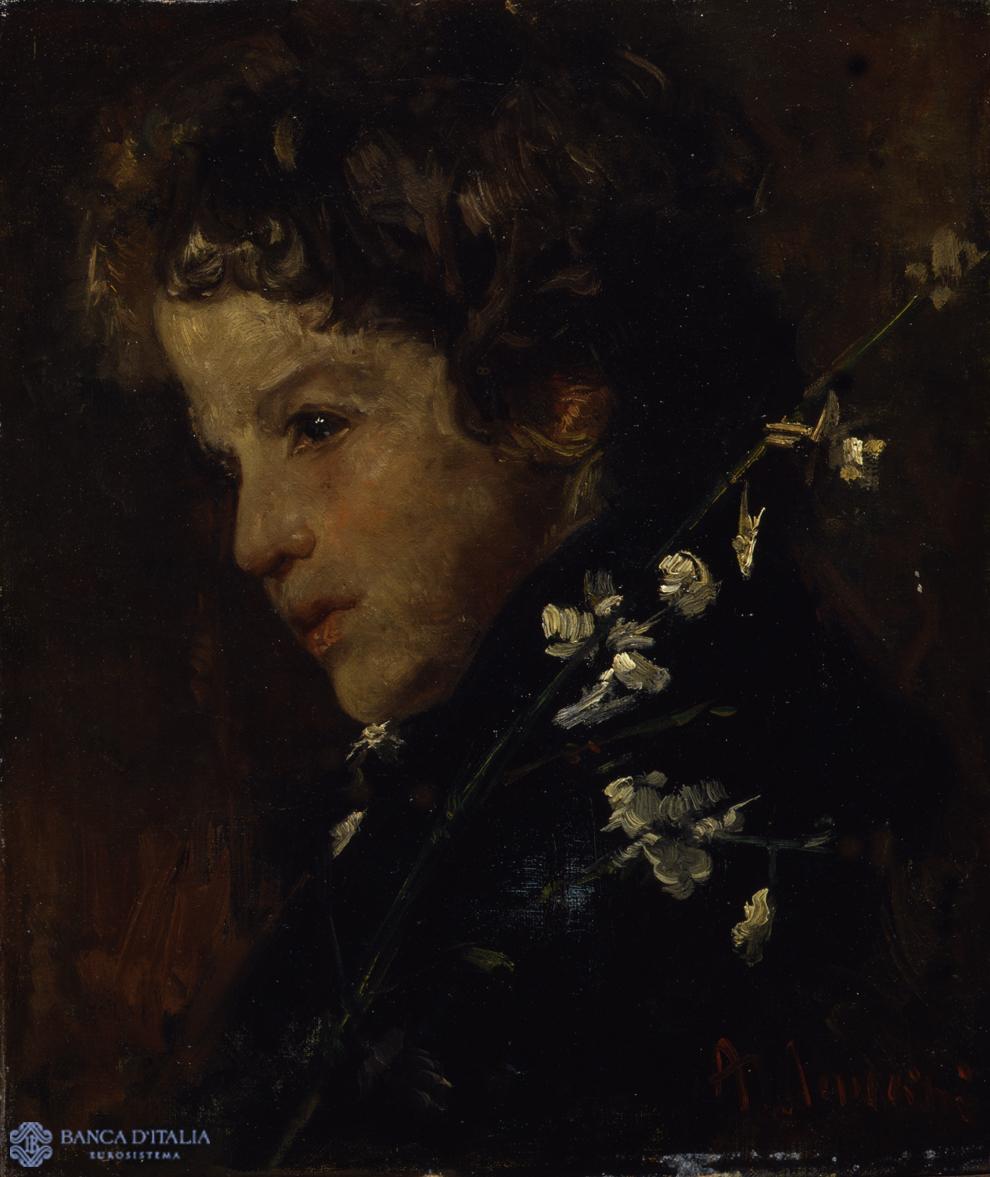
I fiori bianchi
The lad’s immature but attentive face emerges from the dark, the effect stemming from the contrast between the light and the dark tones. The branch of white flowers rings out on the jet-black jacket. Beneath a soft mass of curls enlivened by highlights, the lad’s head is bent slightly and turned towards something or someone.
19th century AD
Painting
Figurative
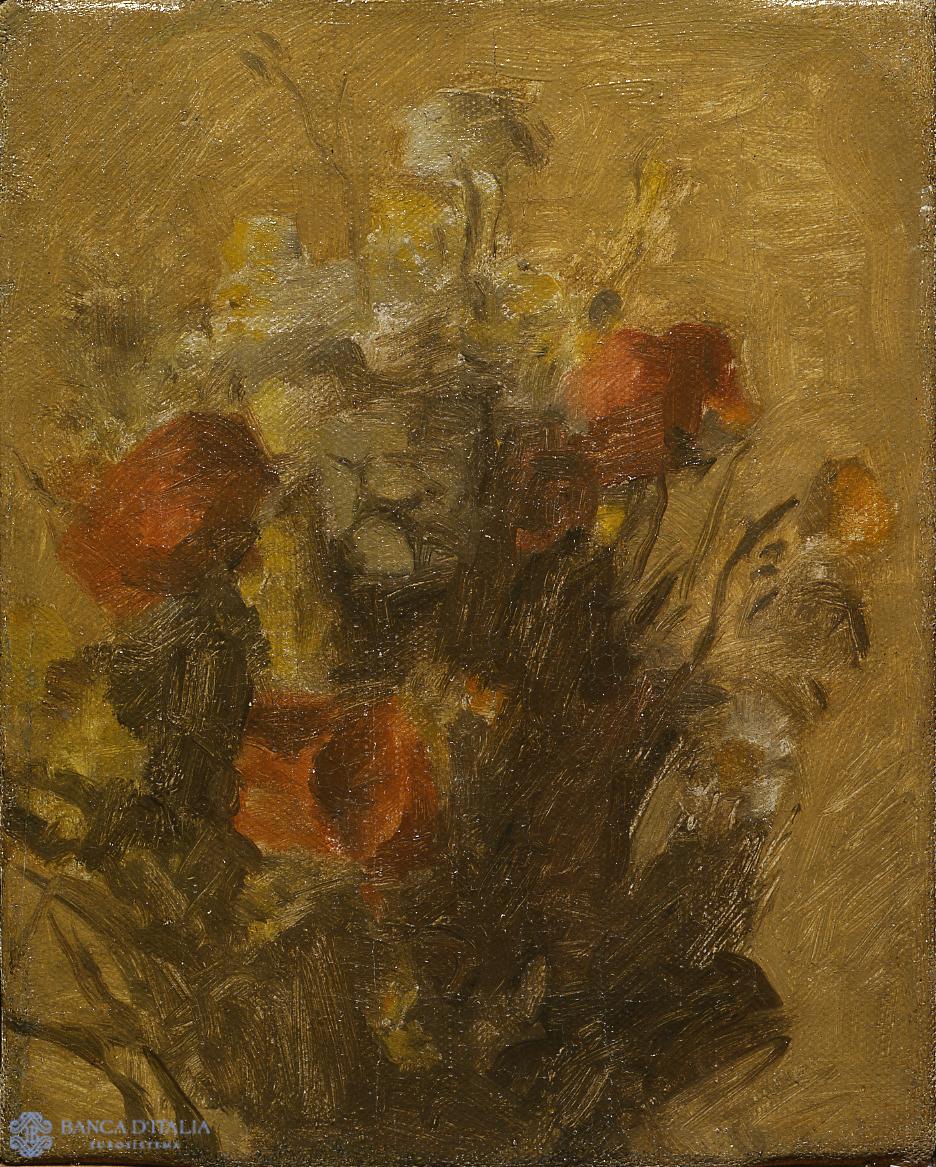
Fiori
Multicoloured corollas – whites, oranges, greens and yellows crowd the foreground of this small canvas – emerge forcefully at the centre of the image of flowers, which is emotional, perturbed as by an existence that flows nearby, leaving upon it its impurities, its waste.
20th century AD
Painting
Still life
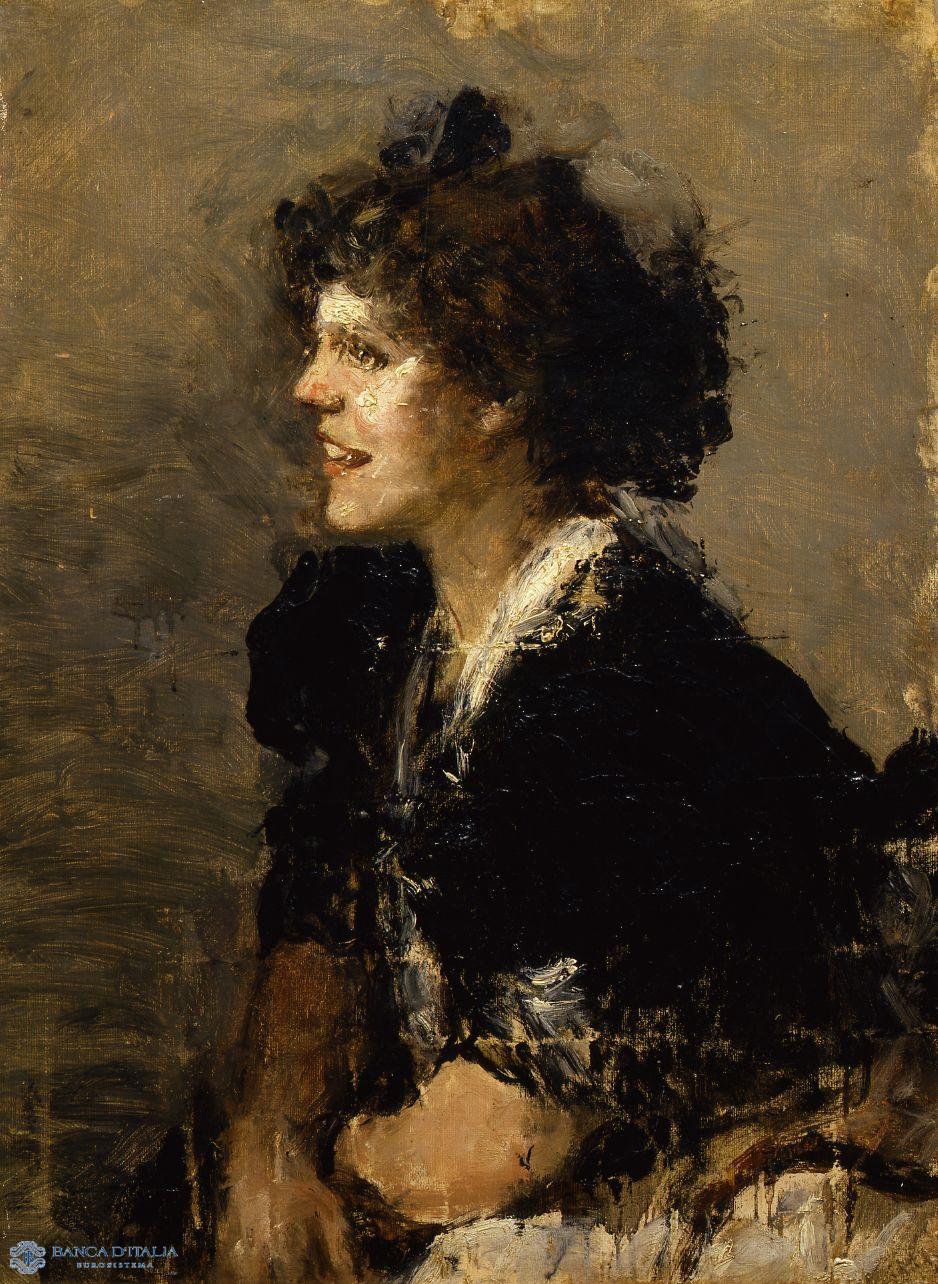
Felicità
The figure, illuminated by the touches of light of her blouse, stands out in black against a lighter background with vivid immediacy. The woman’s beautiful unruly locks are shaded towards chestnut brown; the artist succeeds in rendering the softness and movement that animates her hair with a shiver of vitality that is communicated to her smiling face.
20th century AD
Painting
Figurative

La falciatura
A high horizon illuminated by a diffuse, southern light affords a glimpse of the contours of the hills in the background. The entire foreground is occupied by the scene of mowing in which a group of peasants are engaged. Two standing men are sharpening their scythe.
20th century AD
Painting
Landscape

Diana di Efeso
Part of Aristide Sartorio’s complex research into the various facets of artistic language, this work illustrates the aspect most closely associated with literary or mythological references, against the backdrop of the particular direction taken by Decadentism in Italy, above all within the Roman artistic scene.
Painting
Biblical - Historical - Mythologic